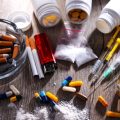

With the Diploma of Alcohol & Other Drugs, you will learn how to provide foundational skills and services to those who experience issues relating to alcohol & other drug use. The responsibilities are diverse in nature but generally include duties such as developing and reviewing treatment plans, advanced interventions, and counselling.
When you graduate, you will be prepared to pursue a career in areas such as Drug and Alcohol Community Support Worker, Alcohol and Other Drugs Community Worker, Outreach Officer (Alcohol and Other Drugs) or Alcohol and Other Drugs Counsellor. You can also become a member of the Alcohol and Other Drugs College through the Australian Counselling Association (entry requirements apply).
This qualification reflects the role of workers who work under broad supervision and guidance and provide services to clients with alcohol and other drug issues.
They can provide counselling, referral, and promotion services. These workers require high-level specialist knowledge, skills, and competencies, especially in regard to laws affecting clients, the range of services available to them, and health issues related to alcohol and drug use and misuse.
Students can buy the entire course or a section at a time (this allows flexibility in payments.
The following are the admission requirements of EMS Education & Training:
Assessments may include written questions, demonstration of tasks/techniques, group activities, in-class activities, role play, presentation, work-based projects, research projects, and workplace observations/evidence.
Assessments and quizzes are conducted throughout the lessons, and a student must complete each lesson before moving on to the next lesson. There are a series of skills drills for some chapters and exercises within the chapter sections.
This qualification requires that the learner complete at least 160 hours of work placement under clinical supervision.
Students must complete all units in this course to receive a HLT51020 Diploma of Emergency Health Care certificate.
Learners who partially complete the qualification will receive a Statement of Attainment for their deemed competent units.
EMS Education & Training recognises qualifications issued by other RTOs. EMS Education & Training will accept and mutually recognise the qualifications and Statements of Attainment awarded by any other registered training organisation unless precluded by licensing requirements.
We can also grant you a Credit Transfer for subjects or units you have completed where equivalence can be established between the unit in your course and the subject or unit you have completed.
Recognition of Prior Learning (RPL) is a process where skills and knowledge you have gained through work and life experience and other unrecognised training can be formally recognised.
Contact EMS Education & Training before entry to the course, EMS Education & Training will discuss the process and options for RPL. Suitability is often determined by how much experience you have in a certain area, your work history and previous training.
A USI is needed for all students studying with EMS Education & Training. From 1 January 2015, the students must have a Unique Student Identifier (USI) for undertaking Nationally Recognised Training delivered by a Registered Training Organisation.
The USI is available online and at no cost to the student. This USI will stay with the student for life and be recorded with any nationally recognised VET course completed. Please see the official USI website https://www.usi.gov.au.
Before enrolment, the student must create a USI (Unique Student Identifier).
Relevant resources are available at EMS Education & Training to ensure that the students settle in well, smoothly transit life in new places and achieve the required level of competency in all accredited courses.
Our staff can assist you in how to seek help with local welfare and guidance services.
EMS Education & Training provides an orientation to assist students as an age and culturally-appropriate program.
Students will complete an onboarding and orientation session within the course.
22 units must be completed:
All electives chosen must contribute to a valid, industry-supported vocational outcome.
Core units
CHCADV005 Provide systems advocacy services
CHCAOD001 Work in an alcohol and other drugs context
CHCAOD004 Assess needs of clients with alcohol and other drugs issues
CHCAOD006 Provides interventions for people with alcohol and other drugs issues
CHCAOD007 Develop strategies for alcohol and other drugs relapse prevention and management
CHCAOD008 Provide advanced interventions to meet the needs of clients with alcohol and other
drug issues
CHCAOD009 Develop and review individual alcohol and other drugs treatment plans
CHCCCS004 Assess co-existing needs
CHCCOM006 Establish and manage client relationships
CHCDIV001 Work with diverse people
CHCMHS005 Provide services to people with co-existing mental health and alcohol and other drugs
issues
CHCMHS007 Work effectively in trauma-informed care
CHCPOL003 Research and apply evidence to practice
CHCPRP002 Collaborate in professional practice
CHCPRP003 Reflect on and improve own professional practice
HLTAID011 Provide first aid
Elective units
CHCAOD002 Work with clients who are intoxicated
CHCMGT001 Develop, implement and review quality framework
HLTAAP001 Recognise healthy body systems
HLTAID009 Perform cardiopulmonary resuscitation
HLTAID014 Provide advanced first aid
HLTHPS006 Assist clients with medication
** Please note: electives may vary by state and are subject to change to meet client and industry requirements.
EMS Education & Training has been operational since 1988 and has vast experience in pre-hospital education.
EMSET have mapped the above units of study to the best in industry methods for delivering this Diploma. (See below)